
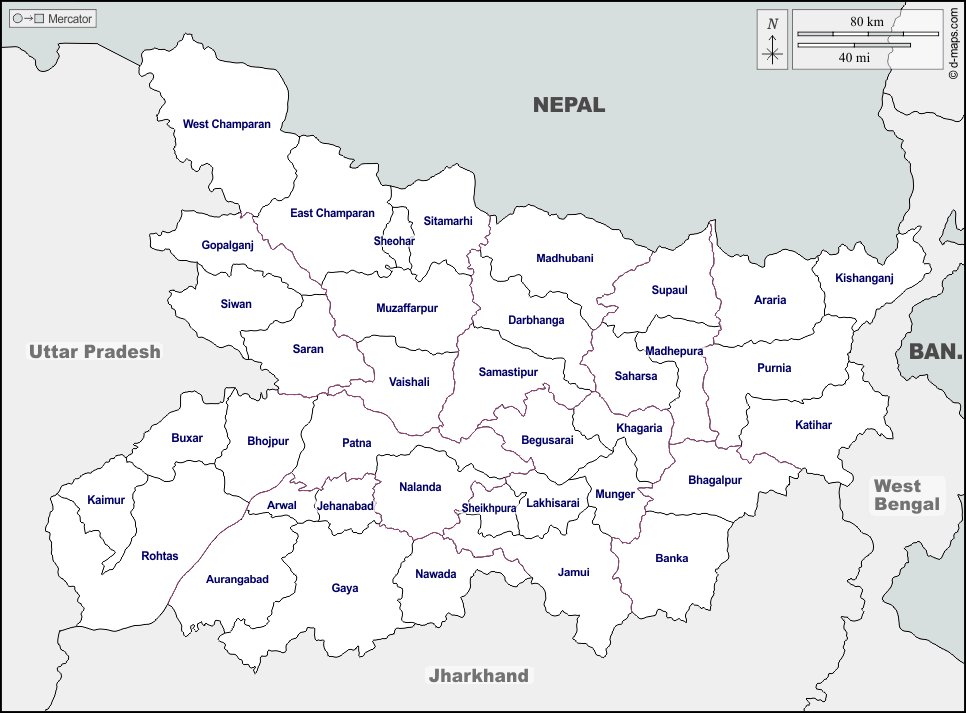
Introduction to Bihar Details and 38 District Information
Bihar, one of the oldest and historically most significant states of India, is globally renowned for its rich heritage, diverse culture, and ancient educational traditions.
This master guide provides complete Bihar Details and 38 District Information, covering the state’s geography, history, culture, economy, education, and detailed insights into all its 38 districts.
Geographic Significance in Bihar
Bihar’s geographical importance lies in its location in the fertile plains of the River Ganga in North India. The soil here is highly productive, making agriculture the backbone of the state.
The mighty River Ganga divides Bihar into North Bihar and South Bihar, while other important rivers like Kosi, Gandak, and Sone form the lifeline of agriculture and daily life.
This fertile geography is one of the key highlights of Bihar Details and District Information, linking the state with cultural and economic exchanges across India.
Buy TOP Guide
Historical Importance in Bihar Details and 38 District Information
Bihar has played a central role in shaping Indian history. The Magadh Empire and the Mauryan Dynasty emerged from this region, laying the foundation of a unified India.
Bihar is also the birthplace of two great religions — Buddhism and Jainism. At Bodh Gaya, Lord Buddha attained enlightenment, making it one of the world’s most sacred pilgrimage centres.
The ancient universities of Nalanda and Vikramshila attracted scholars from across the world, establishing Bihar as a global hub of knowledge.
These historical facts highlight why Bihar Details and District Information is incomplete without understanding its glorious past.
Cultural Diversity in Bihar
Bihar’s cultural identity is deeply rooted in traditions, languages, festivals, and art forms. The state is home to multiple languages such as Hindi, Urdu, Maithili, Bhojpuri, Magahi, and Angika, which reflect its rich diversity.
The most celebrated festival of Bihar is Chhath Puja, observed with immense devotion along the banks of rivers. It is a symbol of purity and faith, attracting global recognition.
Bihar is also famous for Madhubani painting, a world-renowned art form that represents its cultural heritage. Along with this, folk music and dances such as Bidesia and Jat-Jatin are integral parts of rural life and community celebrations.
This vibrant cultural landscape adds a unique dimension to Bihar Details and District Information, showing how tradition and modernity coexist in the state.
Bihar at a Glance – Quick Overview
To understand Bihar quickly, here is a snapshot of its key facts. This Bihar Details and District Information table highlights the most important aspects of the state:
| Category | Details |
|---|---|
| Capital | Patna |
| Total Districts | 38 |
| Population (Approx.) | 130 million (13 Crore) |
| Official Languages | Hindi, Urdu, Maithili, Bhojpuri, Magahi, Angika |
| Literacy Rate | 61.8% |
| Major Rivers | Ganga, Kosi, Gandak, Sone |
| Famous For | Ancient Universities, Buddhist Sites, Mauryan Empire |
This quick overview gives a strong foundation for exploring more about Bihar Details and District Information across its districts.
Festivals and Culture in Bihar Details and 38 District Information
Festivals and cultural traditions form the heart of Bihar’s identity. They not only bring communities together but also showcase the state’s deep spiritual and artistic roots.
- Chhath Puja: The most important and sacred festival of Bihar, dedicated to the Sun God and observed mainly on the banks of rivers. It reflects purity, devotion, and discipline.
- Madhubani Painting: A globally recognised art form originating from Bihar, known for its vibrant colours and unique patterns. It symbolises Bihar’s cultural pride.
- Folk Music & Dance: Traditional performances such as Bidesia, Jat-Jatin, and Jhijhiya play a central role in rural festivities and community gatherings.
These elements of Bihar Details and District Information illustrate how the state’s cultural richness continues to thrive across generations.
Economy and Education
Bihar’s economy is primarily agriculture-based, supported by its fertile plains. Major crops include rice, wheat, maize, and sugarcane, which form the backbone of rural livelihoods. Over time, the state has also seen growth in industries, small-scale businesses, and IT hubs, marking a shift toward modernisation.
In the field of education, Bihar holds a prestigious legacy. Ancient universities like Nalanda and Vikramshila set the foundation for global learning. Today, cities like Patna and Nalanda are home to leading universities, colleges, and coaching institutions.
The state is also a major hub for students preparing for competitive exams like AMU, JMI, BHU, UPSC, and Bihar Board examinations. This strong academic culture makes education a vital part of Bihar Details and District Information.
Explore All 38 Districts
Bihar is divided into 38 districts, each with its own unique history, culture, economy, and educational significance. To make it easier, the districts are grouped into divisions. From Patna to Purnea and Tirhut to Saran, every district plays an important role in shaping Bihar Details and District Information.
Below is the district-wise index. Each district name will link to a dedicated page where you can explore detailed information about its history, geography, economy, culture, tourist places, and coaching resources.
🔹 Division-Wise District Index (Bihar)
Patna Division
Tirhut Division
Saran Division
Darbhanga Division
Kosi Division
Purnea Division
Magadh Division
Munger Division
Bhagalpur Division
Conclusion on Bihar Details and District Information
Bihar is a land of glorious history, vibrant culture, strong educational traditions, and a growing economy. From the ancient wisdom of Nalanda to the devotion of Chhath Puja and from fertile agricultural plains to modern educational hubs, Bihar represents both tradition and progress.
This comprehensive guide to Bihar Details and district information provides an overview of the state, along with access to detailed pages for each of its 38 districts. Whether you are a student, traveller, or researcher, exploring Bihar means understanding the very roots of India’s civilisation.
By going through the district-wise pages, you can discover Bihar’s diversity more closely — its heritage, local culture, tourist attractions, and educational opportunities.